Underwrite Pro
Back-office platform for underwriters and case managers. Streamlined approval workflows, tightened collaboration, surfaced application data faster.
Intro
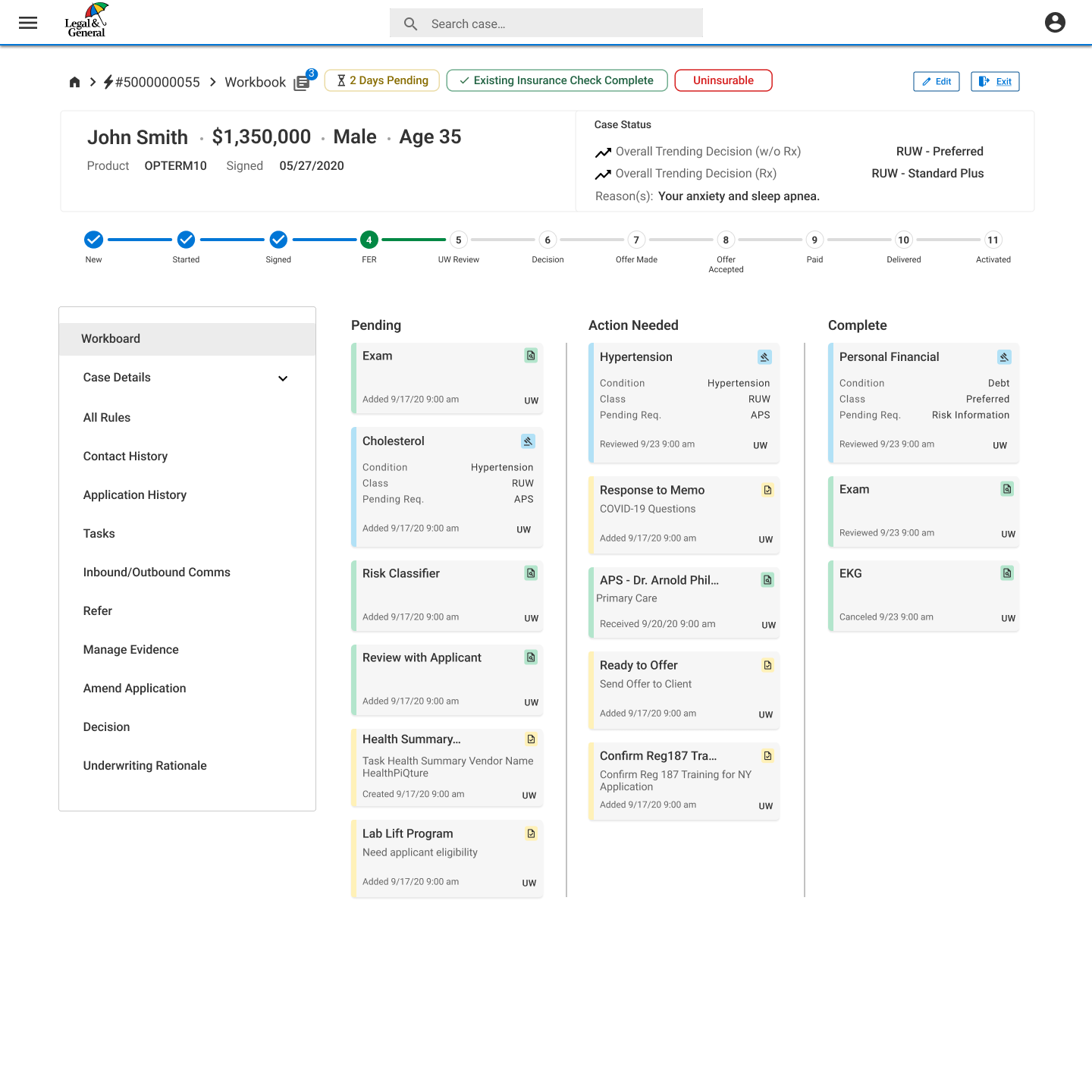
Insurance underwriting teams often rely on fragmented tools to manage applications, documents, and communication, creating inefficiencies and slowing decision-making. To address this, I designed a centralized back-office underwriting platform that streamlines workflows, improves collaboration between underwriters, case managers, and agents, and provides faster access to critical application data. Over a 5-year engagement, I led the UX/UI design, guiding the product from user research and information architecture to wireframes, usability testing, and high-fidelity designs to create a more efficient and scalable underwriting experience.
Duration: 5 Years
Role: Lead UX/UI Designer
The Problem
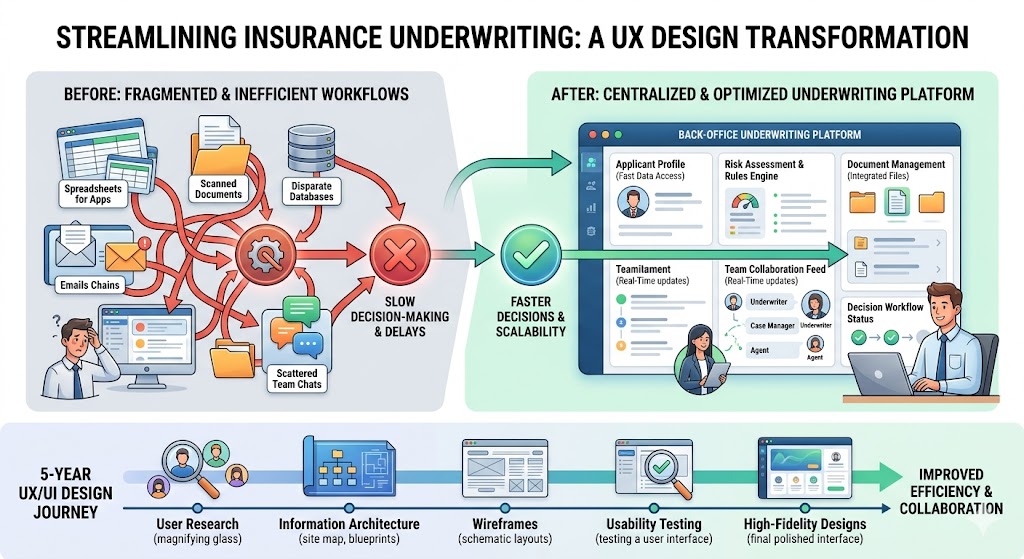
Underwriters, case managers, and agents faced inefficiencies in the life insurance application process due to fragmented tools and slow access to critical consumer data. They needed a unified platform to streamline workflows, improve task management, and enhance collaboration.
The Goal
Design and develop a comprehensive back-office underwriting platform that centralizes information, optimizes workflows, and enables seamless communication between stakeholders, ensuring faster and more efficient life insurance processing.
My Role
User Research & Analysis Conducted user interviews, surveys, and competitive analysis to identify pain points and opportunities.
Wireframing & Prototyping Created low-fidelity wireframes to explore layouts and refine user flows. Developed high-fidelity designs and interactive prototypes for testing and validation.
Information Architecture Organized and structured platform content for intuitive navigation and seamless user interactions.
Usability Testing & Iteration Conducted usability studies, gathered feedback, and iterated on designs to improve user experience.
Collaboration & Handoff Worked closely with developers to ensure smooth design handoffs and accurate implementation.
User Research
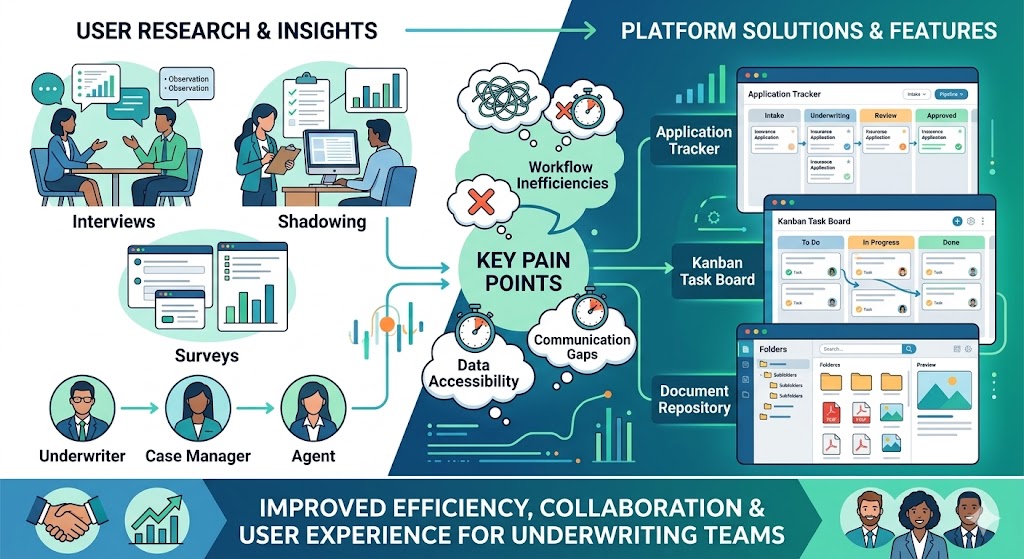
Through interviews, shadowing, and surveys with underwriters, case managers, and agents, I uncovered key pain points beyond data accessibility, including workflow inefficiencies and communication gaps. These insights shaped the platform's design, leading to: Application Tracker for centralized data access, Kanban Task Board for streamlined workflow, Document Repository for efficient file management. By addressing these issues, the platform significantly improved efficiency, collaboration, and user experience for underwriting teams.
Key Pain Points & Solutions
Workflow Inefficiencies
Manual processes caused delays. We introduced a Kanban task board to streamline workflows and improve efficiency.
Difficult Data Access
Users struggled to find application data. A centralized application tracker provided quick and easy access to key information.
Communication Gaps
Stakeholder communication was fragmented. We added real-time collaboration tools and notifications to improve coordination.
Document Management Issues
Retrieving files was cumbersome. A document repository with advanced search enabled seamless storage and access.
User Personas

David
LIFE INSURANCE AGENT
David is a busy life insurance agent who manages multiple client applications at once. He relies on quick access to consumer data and transparent updates to guide applicants efficiently through the underwriting process. He frequently works on the go and needs a streamlined way to monitor application progress and collaborate with underwriters and case managers.

Sarah
INSURANCE UNDERWRITER
Sarah is a detail-oriented underwriter responsible for evaluating risk, reviewing documents, and making informed decisions on life insurance applications. She manages multiple cases simultaneously and depends on complete, accessible data to work efficiently. Workflow clarity and quick document retrieval are essential to her productivity.

Emily
LIFE INSURANCE APPLICANT
Lisa coordinates the flow of information between agents and underwriters. She keeps applications moving, tracks status updates, and ensures all required documents are submitted. With several cases in progress at once, she relies on organized workflows, clear task visibility, and efficient communication tools to prevent delays.

Lisa
CASE MANAGER
Emily is the end user applying for life insurance. She depends on her agent and the underwriting team for guidance and expects transparency throughout the process. She values clear communication, timely updates, and a smooth, hassle-free application experience.
Information Architecture
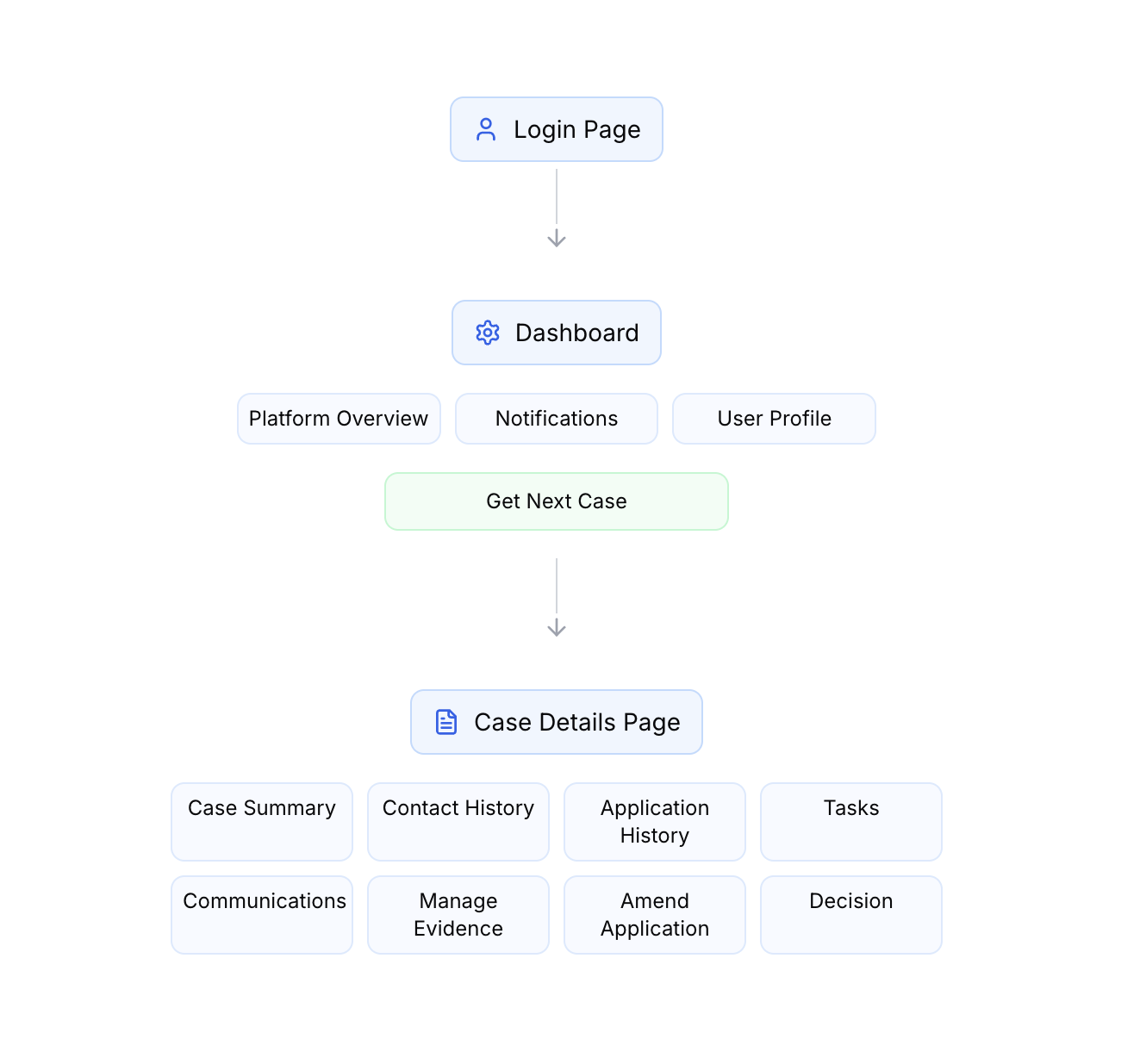
The sitemap provides a clear structure, starting with the HomePage as the central hub. Key sections include the Login Page for authentication, the Dashboard for platform overviews and navigation, the Case Details Page for case information, and the Workboard to manage case statuses. A Get Next Case feature streamlines workflow by allowing users to retrieve the next case efficiently. This layout ensures intuitive navigation and functionality.
Wireframes
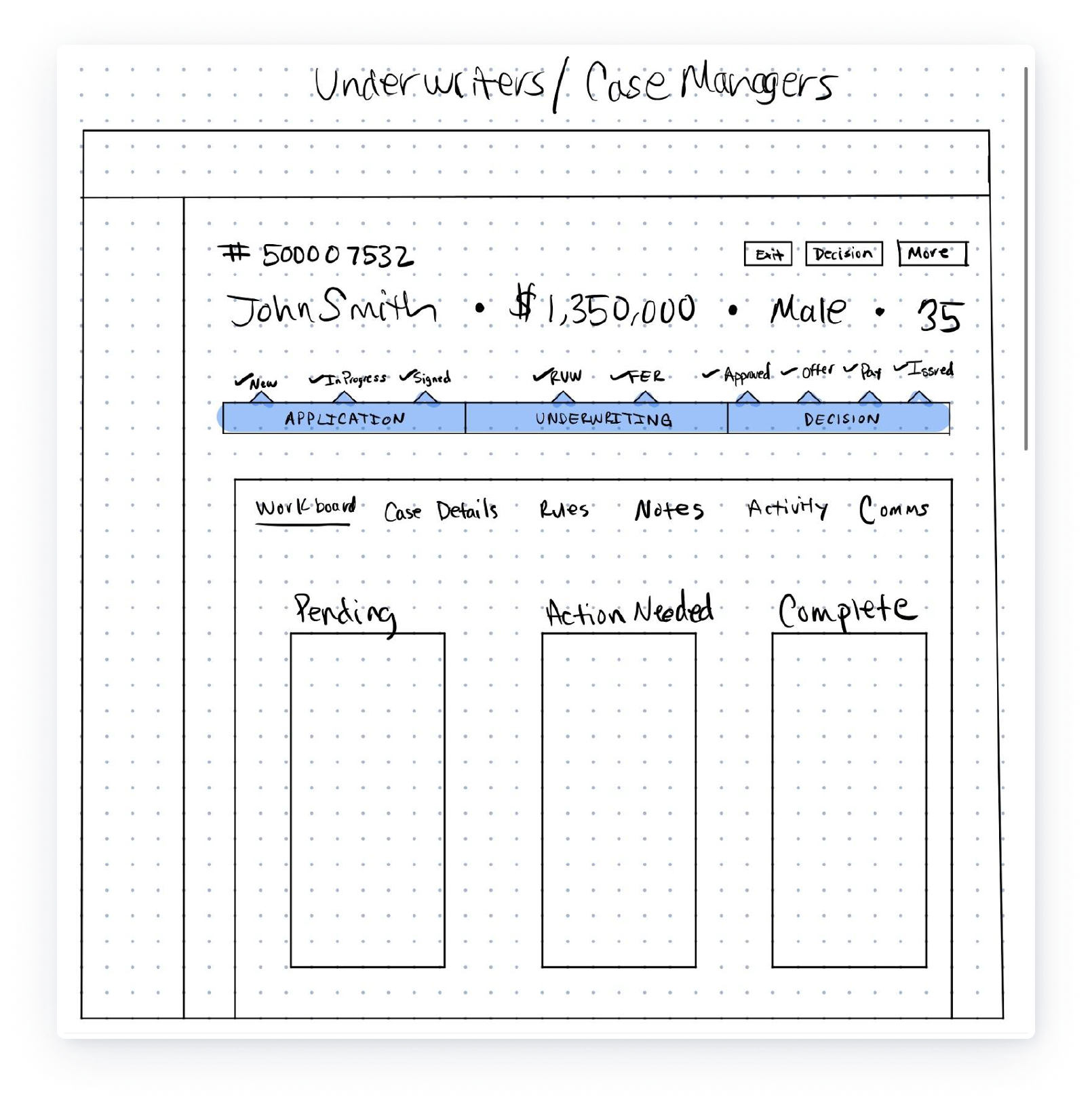
Low-fidelity wireframes are early design sketches used to outline structure, layout, and functionality. These include paper wireframes with screen size variations to ensure responsive design. By visualizing layouts for desktops, tablets, and mobile devices, quick iterations can be made to focus on usability and seamless experiences without being tied to branding.
Low-Fidelity Wireframes
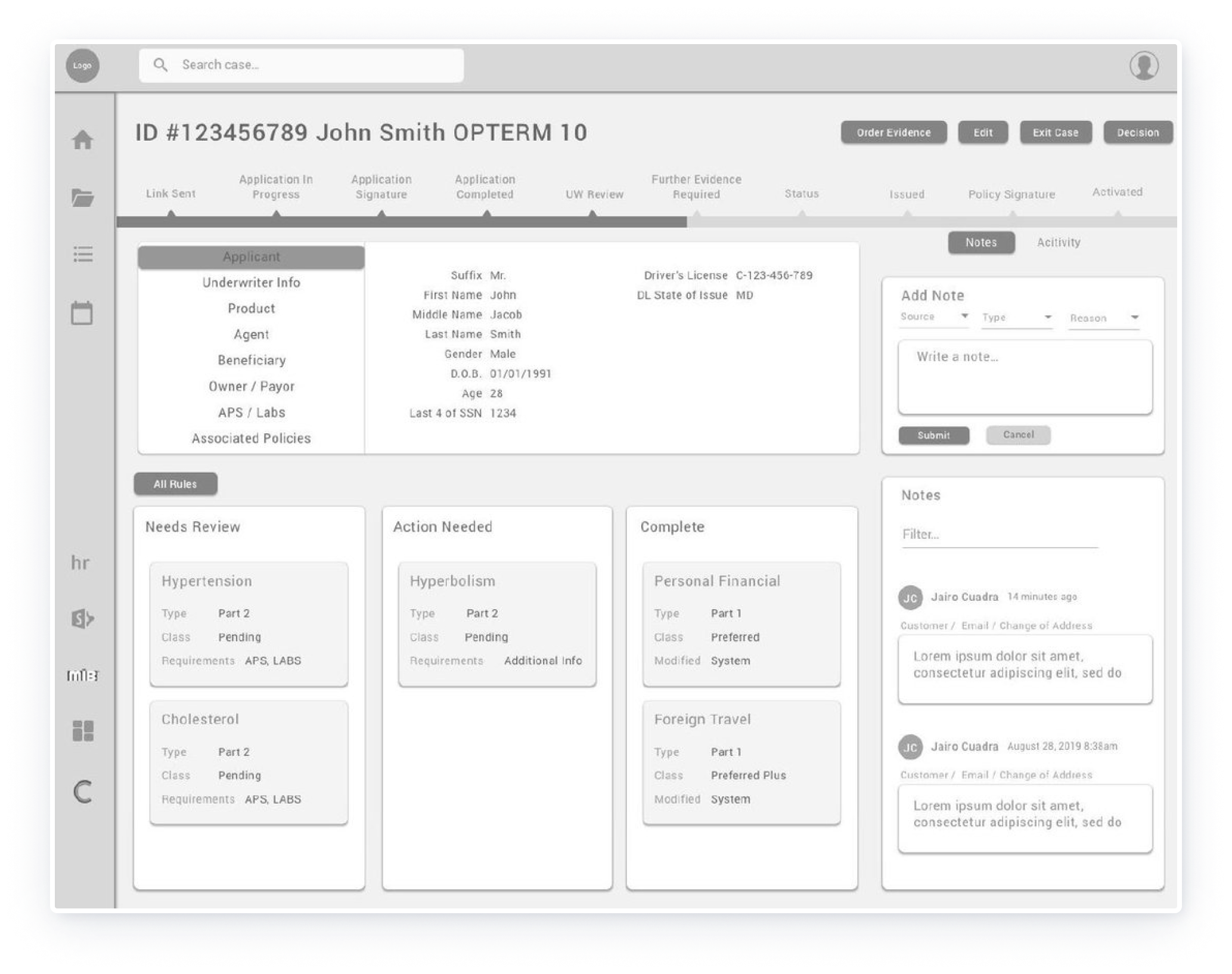
Mid-Fidelity System Views
Usability Study
Unmoderated Study
UserZoom
United States, Remote
5 Participants
Key Findings
- 1
Navigation Users found the navigation intuitive but suggested enhancing the visibility of the search feature for quicker access.
- 2
Responsive Design Some participants struggled with accessing specific functions on smaller screens, highlighting the need for better responsiveness across devices.
- 3
Customization While users appreciated the clear layout, they expressed interest in having more customization options for their dashboards to better suit individual needs.
High-Fidelity Mockups
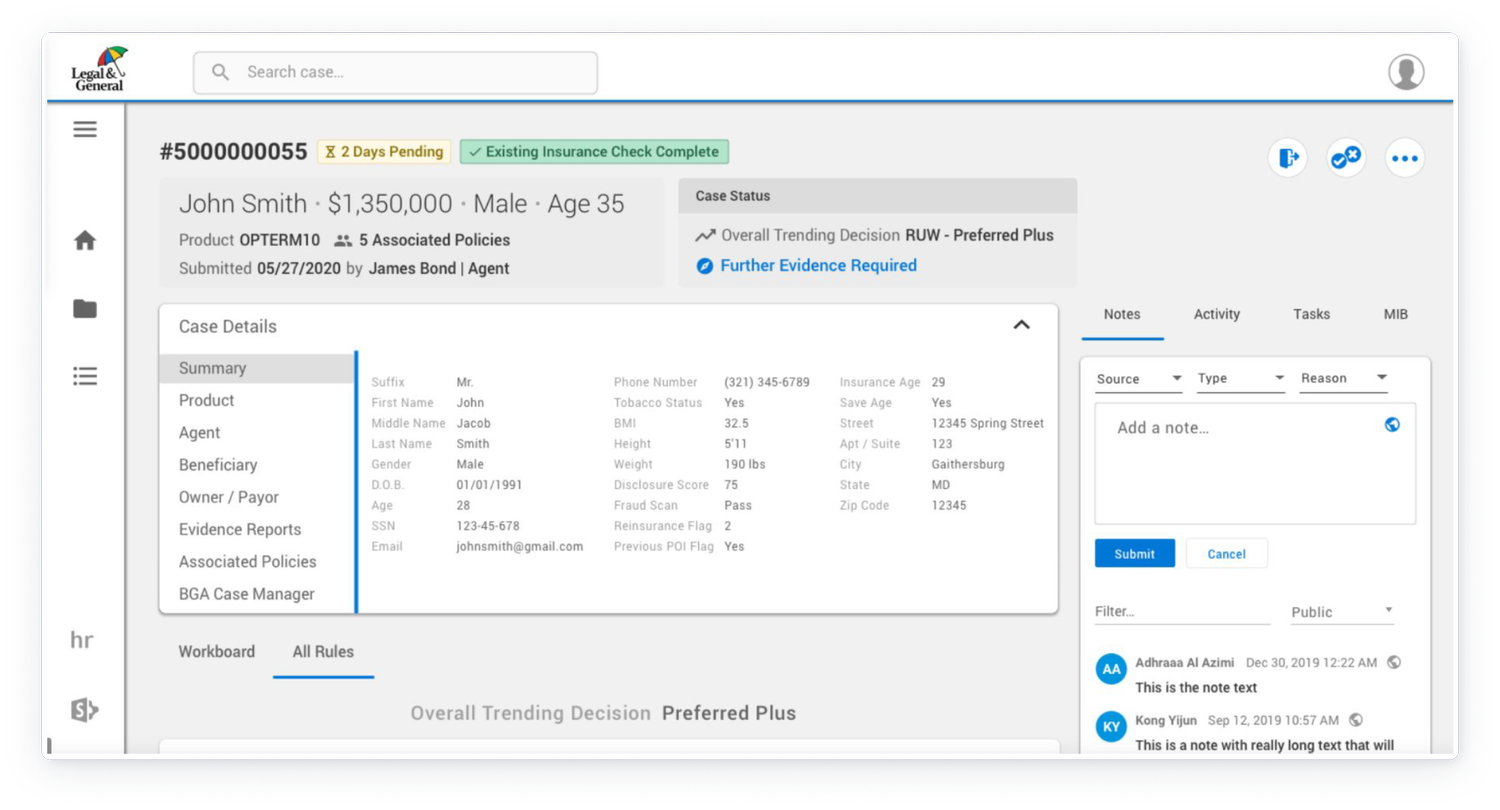
Before User Testing
The initial design focused on functionality but lacked clarity in workflow visibility and task presentation, relying on assumptions about user behavior.
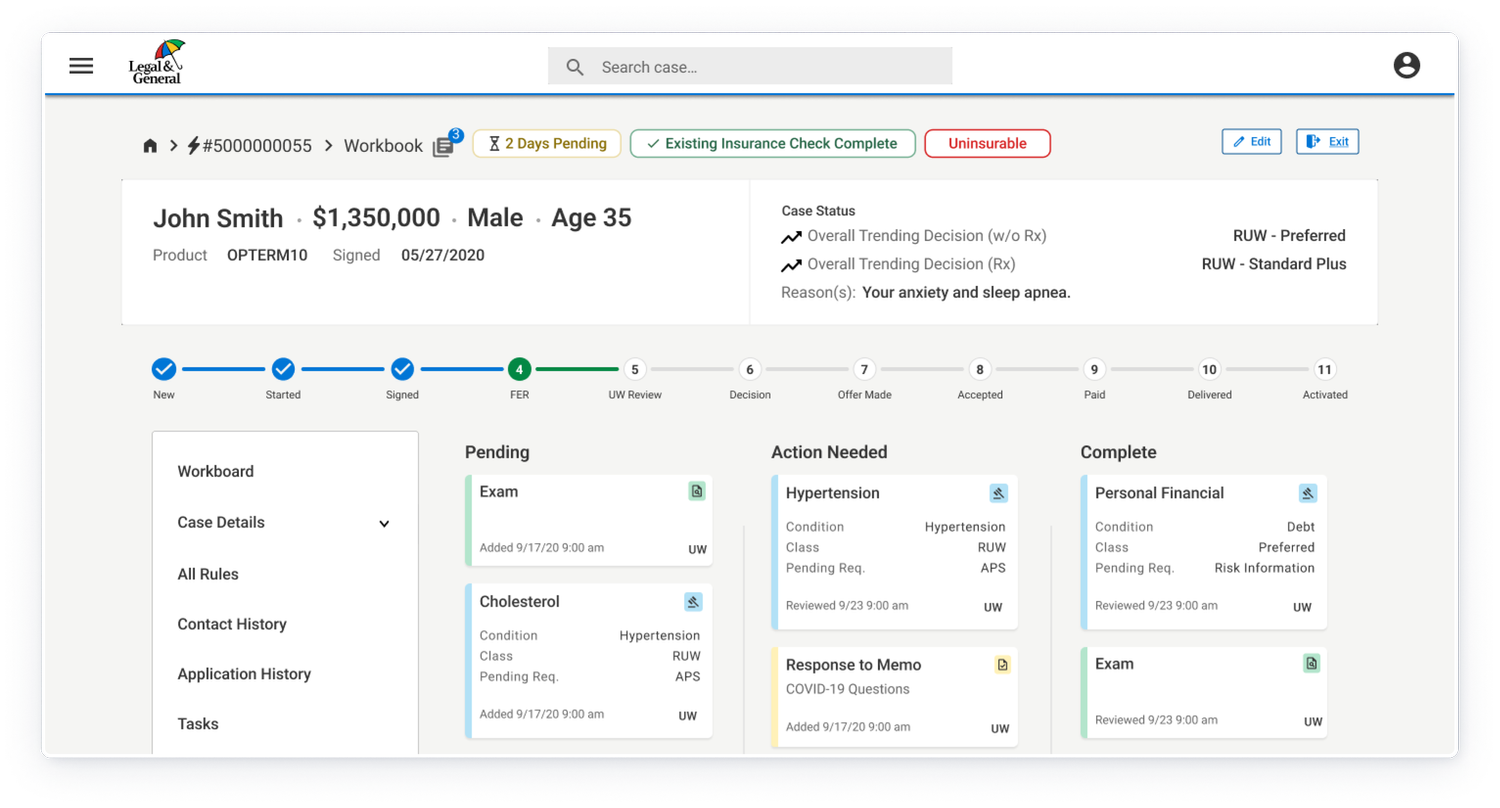
After User Testing
User feedback guided improvements, including clearer progress indicators, enhanced task management, and a more organized, intuitive layout for better usability.
Impact
60%
Reduction in processing time
42%
Increase in risk assessment accuracy
93%
User satisfaction rating
Key Takeaways
The project transformed the underwriting process by streamlining workflows, enhancing collaboration, and improving data accessibility for key stakeholders. By centralizing information and optimizing task management, we achieved a 35% increase in application throughput and a 28% reduction in policy issuance delays. Feedback from leadership highlighted the platform's impact on business operations, with estimated cost savings of $2.3M annually through improved efficiency and reduced manual processing.
Next Steps
Feature Expansion
Introduce additional features, such as advanced tracking tools and AI-driven recommendations, to further enhance efficiency and reduce manual efforts for underwriters, case managers, and agents.
Data Analytics Integration
Implement real-time dashboards that provide actionable insights, enabling users to monitor performance metrics, track application progress, and identify bottlenecks in the underwriting process.
User Training & Support
Conduct comprehensive training sessions for all user roles to ensure they are fully equipped to utilize the platform's capabilities. Develop an ongoing support system, including help documentation and live chat support, to address user concerns and questions.